Minimalist apartments may dominate city skylines, but for many, the real dream lies beyond urban walls - in wide-open spaces where architecture meets nature. The Route d’Ourika, stretching into the foothills of the High Atlas, has quietly become one of Marrakech’s most sought-after corridors for custom-built estates. Here, investors and homebuilders aren’t just buying land - they’re securing a lifestyle defined by space, views, and long-term value. With infrastructure upgrades underway and demand rising, 2026 could mark a turning point for those ready to act.
Essential criteria for selecting land on Route d'Ourika
The rise of bioclimatic villa plots
There’s been a noticeable shift in architectural preferences: today’s luxury isn’t about opulence alone, but sustainability and harmony with the environment.Bioclimatic villas, designed to regulate temperature naturally using orientation, materials, and ventilation, are increasingly popular. These homes require thoughtful site selection - south-facing slopes for winter sun, natural windbreaks, and sufficient surface area to separate living zones from service areas. For those looking to build a bespoke residence, the first step is to buy land in Marrakech that supports this vision.
Administrative checks and VNA status
One of the most critical steps in land acquisition is verifying legal status. A titled plot (known locally as RPA) ensures ownership legitimacy, but equally important is the VNA certificate - the non-agricultural vocation permit. This document allows construction on land that was previously classified as agricultural. Without it, building permissions will be denied. Always confirm that the VNA has been issued and is attached to the title deed. Other red flags include shared ownership, pending disputes, or zoning restrictions that limit building height or footprint.
- Confirmed RPA title
- Valid VNA certificate
- Verified access to water and electricity
- Topographic study completed
These checks may seem daunting, but they’re non-negotiable for a smooth build. Skipping due diligence can lead to years of delays - or worse, legal dead ends.
Investment landscape: Land prices and infrastructure 2026
Impact of 2026 infrastructure projects
While the Route d’Ourika has long been a scenic escape, it's now evolving into a fully connected residential axis. Paving and widening projects are improving travel times between the Ourika Valley and central Marrakech, making daily commutes more feasible. Public investment in road stability - especially after seasonal rains - signals long-term commitment to the area’s development. This isn’t speculative; it’s strategic urban expansion. Easier access means rising interest from families, expatriates, and hospitality investors alike.
Projected land value evolution
Land prices in the Ourika corridor remain competitive compared to urban or Palmeraie zones, but the gap is narrowing. While exact figures fluctuate based on elevation, view quality, and plot size, current trends suggest that well-located plots are appreciating steadily. One-hectare parcels with developable status can range widely in price, influenced by proximity to infrastructure. The real advantage lies in early positioning: those who secure titled land before demand spikes stand to benefit most in the medium term.
High-demand zones around Ourika road
Kilometers 12 to 18 have emerged as hot spots for residential development. These sections strike a balance - close enough to schools, clinics, and supermarkets in Marrakech, yet far enough to preserve tranquility and mountain vistas. Some subdivisions now offer shared water systems and private security, further enhancing appeal. It’s not just about land; it’s about location relative to both nature and necessity. And side by side with new builds, you’ll still find untouched parcels - a reminder that opportunity hasn’t vanished yet.
Comparing plot types for your project
Individual plots vs. gated subdivisions
Choosing between standalone land and a managed community depends on priorities. Independent plots offer complete creative freedom and privacy, but come with full responsibility for utilities, access, and maintenance. Gated subdivisions, meanwhile, provide shared infrastructure - sometimes including treated water, fiber optics, and 24/7 surveillance - at the cost of architectural guidelines and monthly fees. Neither is inherently better; it’s about what suits your lifestyle and project scale.
Agricultural vs. residential potential
Some plots are still classified as agricultural, which can be misleading. With proper VNA conversion, they may be eligible for construction. Even without conversion, certain types of eco-lodges or agro-tourism projects are permitted under Moroccan law. However, these require specific approvals and operate under different legal frameworks than private homes. Always clarify the intended use early to avoid costly missteps.
Landscape features: Atlas views and vegetation
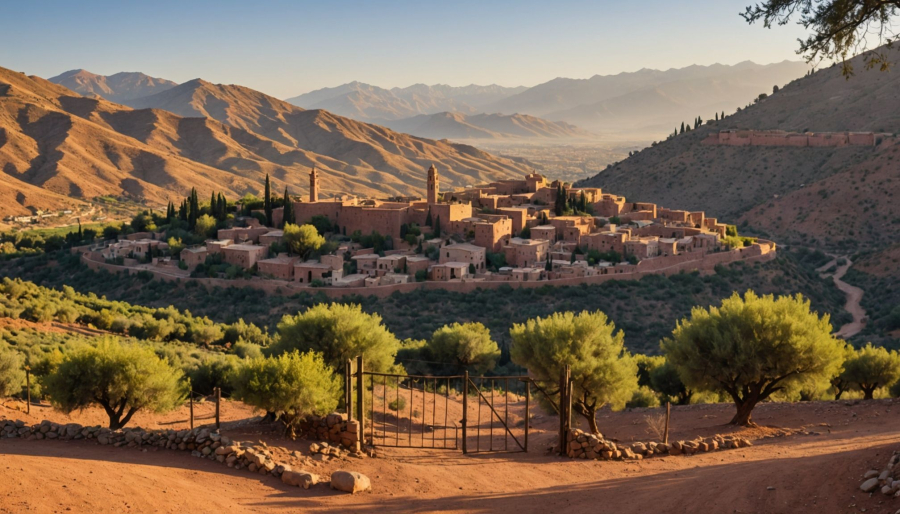
Not all plots are equal when it comes to aesthetics and microclimate. Plots with unobstructed Atlas Mountain views command higher value - not just for beauty, but for natural light and ventilation. Mature olive groves or almond trees add character and shade, reducing heat gain and supporting biodiversity. These aren’t just bonuses; they’re integral to the bioclimatic design philosophy gaining momentum among discerning builders.
| Plot Type | Recommended Project | Common Surface Area | Infrastructure Level |
|---|---|---|---|
| Individual Villa Plot | Single-family home or guesthouse | 1,000 - 2,500 m² | Basic (well + generator) |
| Gated Residential Subdivision | Modern villa with smart systems | 800 - 2,000 m² | High (grid water, fiber, security) |
| Large Agricultural Estate | Eco-lodge or mixed-use development | 1+ hectares | Variable (on-site well common) |
Your frequent questions
Can I build on agricultural land vs. residential land in terms of total living area?
Residential land typically allows a higher building coefficient than agricultural land, even with VNA status. The permitted footprint - usually between 20% and 40% of the total plot - depends on local urban planning rules. Always verify the POS (Plan d'Occupation des Sols) before purchase to avoid surprises.
What are the common hidden costs for drilling a well on Ourika road?
Drilling costs depend on depth and rock hardness, often ranging from 80,000 to 150,000 MAD. Additional expenses include pump installation, water testing, and filtration systems. In some areas, water yield is low, requiring larger storage tanks - a factor often overlooked in initial budgets.
Are there specific legal guarantees required for foreign investors in 2026?
Foreign buyers can own land in Morocco with no nationality-based restrictions, but contracts must be clear and registered through a notary. Ensuring the title is free of liens and that the VNA is legally binding provides essential protection. Working with a local legal expert is strongly advised.
